
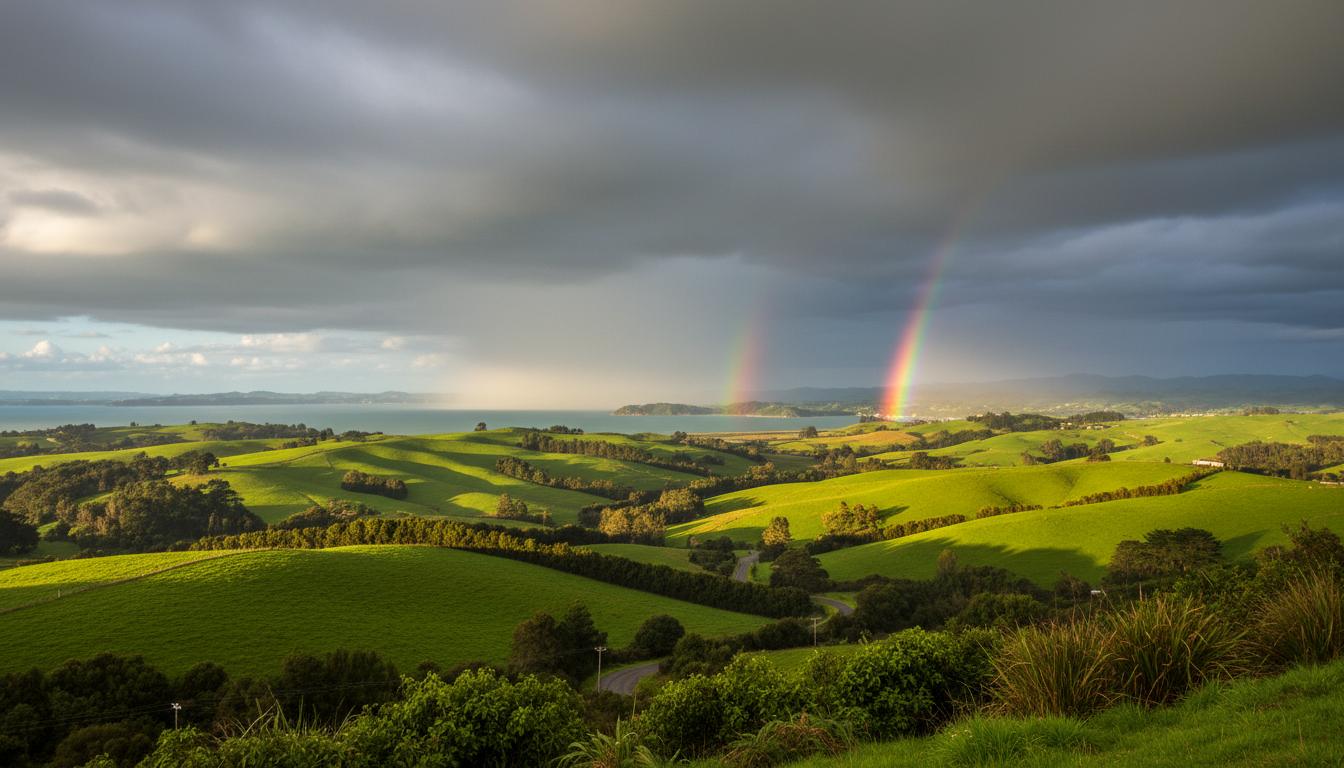
Katikati weather is shaped by sea air from Tauranga Harbour, the Kaimai Range at its back, and a warm, sunny Bay of Plenty setting. If you live here, run an orchard, or you’re planning a weekend, knowing how the wind, rain, and heat behave around Katikati helps you make better calls. This guide explains what to expect month to month, how the local setup works, and the best ways to read a forecast so your plans stick.
What is
Katikati weather is a mild, maritime climate with warm summers, gentle winters, and frequent sea breezes, tempered by the Kaimai Range that can squeeze out heavy rain during onshore flows.
In practice, that means plenty of sunny days, a long growing season for kiwifruit and avocados, and the odd punchy rain event when a front or ex-tropical system sweeps in. The coast is a touch warmer at night, while the foothills run cooler and wetter.
- Summer: warm afternoons, sea breezes, occasional humid spells and afternoon showers.
- Autumn: settled highs, clear mornings, cooler nights, some fog in low-lying spots.
- Winter: mild days, occasional frost inland, wet fronts from the Tasman Sea.
- Spring: quick changes, gusty westerlies, and fast-growing grass and vines.
How it works
Coast and ranges in balance
The Tauranga Harbour moderates temperature near Katikati. Water holds heat, so coastal suburbs stay milder overnight. A few kilometres inland, the Kaimai Range looms. When moist air climbs the slopes, it cools and drops rain, so foothill locations like Aongatete often see more frequent falls than the shoreline.
Daily rhythm
On settled days, katikati weather follows a predictable beat. Mornings start calm. As land warms, a sea breeze drifts in from late morning, peaking mid-afternoon and fading near sunset. On winter mornings, radiation fog can settle in low paddocks, then burn off by late morning if the sun gets through.
Fronts, lows, and ex-tropical bursts
Most rain arrives with fronts crossing the Tasman. Northeasterly setups feed humid air onto the range and can bring heavier, longer spells. Every few summers, ex-tropical cyclones skim the North Island, stacking strong winds, heavy rain, and rough seas across the Bay of Plenty. Impacts vary street by street—a hallmark of katikati weather thanks to local terrain.
Seasonal drivers
El Niño and La Niña tilt the odds. El Niño often brings stronger westerlies and drier, sunnier spells for the Bay of Plenty. La Niña can push more humid northeasterlies, adding cloud and rain. The Southern Annular Mode and blocking highs around Aotearoa also nudge patterns, shifting how long settled or unsettled runs last.
Types / examples
Common katikati weather setups
- Sea-breeze day: Sunny, 23–26°C, gentle NE wind from late morning, cooler by the coast.
- Tasman front: Cloud builds, NW wind turns W–SW after the front, showers follow on the range.
- Northeasterly rain: Low cloud, humid, steady rain more persistent on the foothills.
- Winter high: Clear, chilly dawn, light winds, frost possible inland; mild, bright afternoon.
- Spring westerly: Fast-moving showers, sunny breaks, gusts over open paddocks.
- Ex-tropical remnant: Heavy rain bands, squally gusts, risk of slips and local flooding.
Microclimate comparison across Katikati
| Area | Temperature tendency | Rain pattern | Wind | Notes |
|---|---|---|---|---|
| Harbour fringe (Tahawai, Tuapiro Point) | Milder nights, smaller daily range | Less frequent heavy totals | Sea breezes more noticeable | Good for evening walks; lower frost risk |
| Township / SH2 corridor | Warm afternoons, moderate nights | Showers with fronts; quick clearing | Breezy on changeable days | Fog on calm winter mornings in hollows |
| Foothills (Aongatete, Kauri Point slopes) | Cooler nights, larger range | More orographic rain in NE flows | Occasional downslope gusts | Higher frost risk; lush pasture growth |
Season snapshot
| Season | Typical highs / lows (°C) | Rain tendency | What to expect |
|---|---|---|---|
| Summer (Dec–Feb) | 22–27 / 14–18 | Showers; occasional heavy bursts | Sunny, humid days; sea swimming; high UV |
| Autumn (Mar–May) | 17–24 / 9–15 | Generally settled; some fog | Calm spells, cooler evenings, great hiking |
| Winter (Jun–Aug) | 12–16 / 5–9 | Fronts from Tasman; wet runs | Mild days, occasional frost inland, clearer breaks |
| Spring (Sep–Nov) | 16–21 / 8–12 | Showers, quick changes | Windier at times, fast growth, variable skies |
Pros and cons
Why katikati weather is a drawcard
- Long, mild growing season ideal for kiwifruit and avocados.
- Plenty of sunshine and sea-breeze relief on hot afternoons.
- Winter cold is brief and manageable at sea level.
- Access to both harbour and hills—good options regardless of wind.
Trade-offs to keep in mind
- Heavy rain and slips possible in strong northeasterlies or ex-tropical systems.
- Humidity can make summer heat feel stickier inland.
- High UV—sunburn risk rises quickly, even on hazy days.
- Microclimates mean conditions can differ across short distances, complicating planning.
How to use or choose
Step-by-step: plan a day with katikati weather
- Check today’s MetService forecast for Katikati or nearby Tauranga to see wind, temperature, and rain risk.
- Open the rain radar to spot approaching bands; note speed and direction.
- Look at wind and gust maps if boating or heading to open ridges; adjust timing for the sea-breeze peak.
- Scan the marine or harbour forecast if you’re on the water; confirm tide times and swell.
- Review the UV index and plan shade, sunscreen, and hats accordingly.
- If driving SH2 or the Kaimai crossing, check road weather warnings and live updates from Waka Kotahi.
- For orchards, watch dew point, wet-bulb, and overnight lows to time spraying and frost protection.
Choosing reliable sources
- MetService: official warnings, town and marine forecasts, rain radar.
- NIWA: climate insights, seasonal outlooks, river and drought context.
- Weather apps with high-resolution models: helpful for hour-by-hour trends; cross-check against official advice.
- Bay of Plenty Civil Defence: alerts for severe weather, flooding, and slips.
Forecast source comparison
| Source | Strengths | Best use in Katikati | Notes |
|---|---|---|---|
| MetService | Official warnings, New Zealand-tuned forecasts | Daily planning, severe weather, marine updates | Use rain radar to time showers and fronts |
| NIWA | Research-grade climate data and seasonal outlooks | Understanding El Niño/La Niña impacts | Great for growers and long-range context |
| WeatherWatch | Readable local commentary and maps | Cross-check wind and rain timing | Good for quick scan on busy days |
| Windy / similar map apps | Multiple models, wind and rain animations | Spot sea-breeze strength, track systems | Compare models; don’t ignore official warnings |
Packing and planning tips
- Summer: light layers, a windproof top for the sea breeze, reef-safe sunscreen, hat, and extra water.
- Winter: a warm layer for dawn, quick-dry outer shell for passing showers, beanie for inland starts.
- Year-round: sunglasses, sturdy shoes for muddy tracks after rain, and insect repellent near the harbour at dusk.
FAQ
What is katikati weather like most of the year?
Mild and maritime. Expect warm summers with sea breezes, gentle winters, and changeable showers when fronts move through.
Does it snow in Katikati?
Snow is very rare at sea level. The Kaimai tops can see occasional flurries in strong winter outbreaks, but not the township.
When is the best time to visit?
Late summer to early autumn is a sweet spot—plenty of settled days, warm water, and lighter winds. Spring offers bright, green hills but more changeable weather.
How hot does it get in summer?
Typical afternoons sit in the mid-20s °C. Hot spells can push into the high 20s, especially inland and out of the breeze.
Is katikati weather humid?
Yes, at times. Northeasterly flows bring humidity, especially in late summer. Sea breezes help on the coast; inland feels stickier.
Are ex-tropical cyclones a risk?
Remnants can pass near the Bay of Plenty some summers, bringing heavy rain, strong gusts, and rough seas. Follow MetService warnings and local Civil Defence updates.
Where can I get the most accurate forecast?
Start with MetService for katikati weather and official warnings. Check rain radar and, if needed, cross-reference wind and rain timing with a map-based app.
Why does rain vary so much across short distances?
The Kaimai Range forces moist air upward, enhancing rain on the foothills while the harbour fringe can stay lighter. Microclimates are part of daily life here.
How strong is the sun?
UV is high across New Zealand. Even on hazy days, short exposure can burn in summer. Use sunscreen, hats, and shade—especially around midday.
What should growers watch most closely?
Dew point and overnight lows for frost risk, wind and humidity for spraying windows, and multi-day rain totals during northeasterly setups that can saturate soils.
Final take
Katikati weather rewards those who read the signs: the afternoon sea breeze, a line of cloud piling on the Kaimai, a clean radar gap for a perfect coastal walk. With a quick daily check of the forecast and an eye on local microclimates, you can plan smart, stay safe, and make the most of every Bay of Plenty day.