
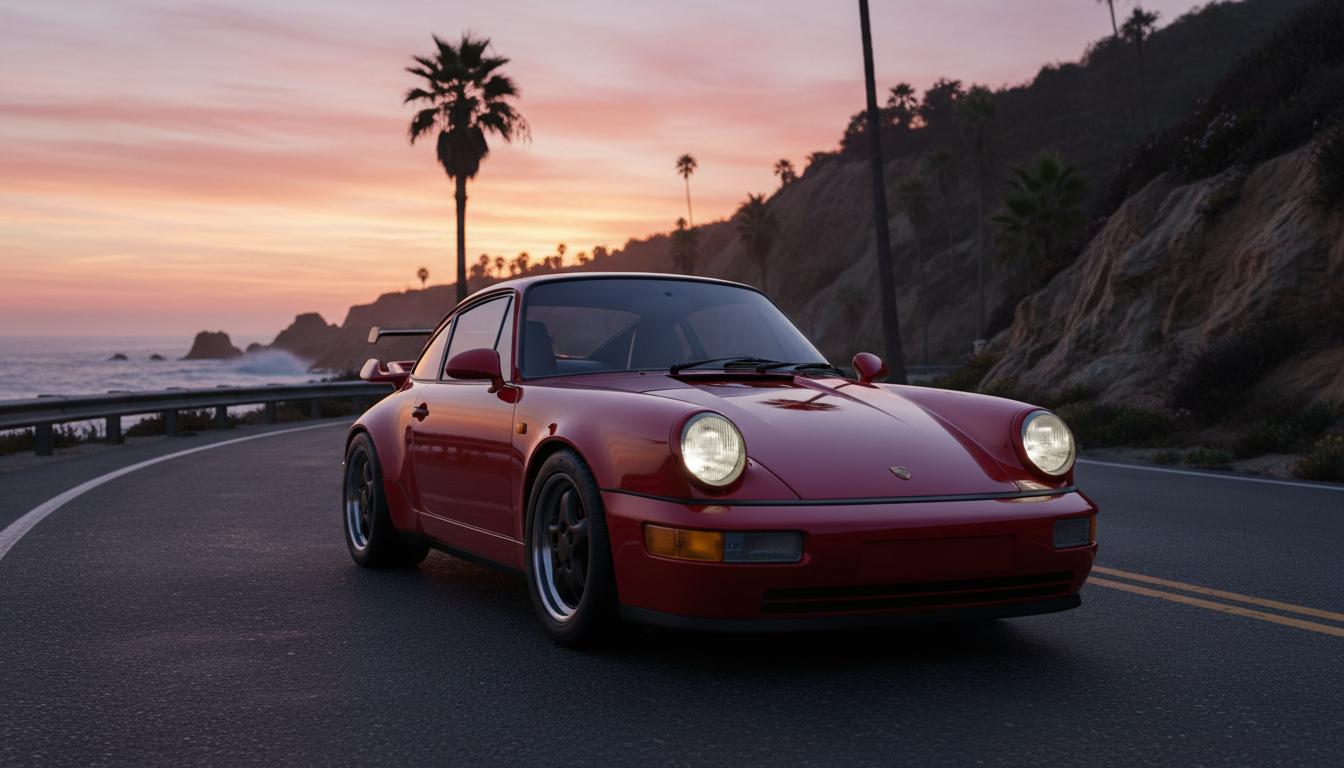
The Porsche 911 is one of those rare machines that turns any ordinary road into an occasion. It balances daily usability with genuine sports-car pace, and it has done so for more than six decades. If you’re in New Zealand and curious about the porsche 911—how it works, which model suits you, and what to look for locally—this guide walks you through it in clear, practical terms.
What is
The porsche 911 is a rear-engined, 2+2 sports car with a flat-six engine and a timeless silhouette. It’s built to be fast, tactile, and dependable enough to live with every day. That mix of performance and practicality is the secret sauce. You can commute in it, blast across the Crown Range on a clear morning, and drive home with groceries in the back—all in the same car.
In New Zealand, the 911 is sold new through official Porsche Centres and is widely available used across several generations. Right-hand-drive cars are common here, and many Kiwis import well-kept examples from the UK, Japan, and Australia. With proper care, a 911 holds value well and delivers a level of engagement few cars match.
Why it matters in NZ
- It fits our roads: compact footprint, massive traction, and confidence on twisty tarmac.
- It’s liveable: comfortable ride (especially with adaptive dampers) and decent luggage space.
- It’s durable: many owners daily-drive a 911 and clock big kilometres with routine maintenance.
How it works
At the heart of the porsche 911 is its layout: the engine sits at the back, over the rear axle. That trait defines how the car accelerates, steers, and grips.
Core engineering
- Flat-six engine: Low, compact, and smooth. Most modern 911s use a twin-turbo flat-six for strong mid-range torque. GT models (like the 911 GT3) use a naturally aspirated flat-six for razor-sharp response.
- Rear-engine traction: Weight over the driven wheels boosts traction on launch and out of corners, especially in wet conditions common across NZ.
- Transmissions: A crisp 7-speed manual on select models or Porsche’s PDK dual-clutch gearbox (lightning-fast shifts, great in traffic and on track).
- Drivetrain: Rear-wheel drive for classic feel; “4” models (Carrera 4, 4S, Turbo) add all-wheel drive for extra security and all-weather pace.
Chassis and control
- PASM adaptive suspension: Adjusts damping for comfort or control at a button press.
- Rear-axle steering (on many higher trims): Enhances agility at low speeds and stability at high speeds.
- PTV and torque vectoring: Helps the car rotate cleanly through corners.
- Brakes: Steel brakes standard; Porsche Ceramic Composite Brakes (PCCB) optional for lighter, fade-resistant stopping power.
- Aero: Active elements (like a moveable rear wing) balance drag and downforce.
Inside the cabin
- 2+2 seating: Small rear seats are best for kids or short trips; they fold to expand luggage space.
- Driver modes: Normal, Sport, Sport Plus tailor throttle, shifts, suspension, and exhaust.
- Modern tech: Clear digital-analogue instruments, smartphone integration, and efficient climate control make the 911 easy to live with.
Types / examples
The porsche 911 range spans from everyday Carrera models to track-bred GT cars and the ferociously quick Turbo line. Recent updates introduced hybrid assistance in the 911 Carrera GTS (T-Hybrid), designed to improve response and efficiency without plug-in complexity.
Core families
- 911 Carrera, Carrera S, and GTS: The sweet spot for most drivers. Twin-turbo flat-six, available with rear- or all-wheel drive, and coupe, cabriolet, or Targa body styles.
- 911 Turbo and Turbo S: Supercar pace with everyday polish. All-wheel drive, huge torque, and devastating acceleration.
- 911 GT3 and GT3 RS: Track-focused, naturally aspirated thrillers. Sharper suspension, big aero, and spine-tingling revs.
- 911 Targa: Open-air feel with a beautiful wraparound glass rear section and a power-operated centre roof panel.
- 911 Dakar: Raised ride height, rally-inspired tyres, and off-pavement capability without losing 911 character.
Generations you’ll see in NZ
- Classic air-cooled (pre-1998): 964 and 993 are collectible and characterful.
- 996/997 (1999–2012): Big step in performance and comfort; research IMS-bearing and bore-scoring risks on certain engines and budget for a thorough pre-purchase inspection.
- 991 (2012–2019): Wider track, more refinement, early adoption of turbocharged Carreras.
- 992 (2019–present): Current platform with advanced chassis tech, strong infotainment, and the latest performance gains.
Model comparison (typical factory figures)
| Model | Engine | Drivetrain | Power (kW) | 0–100 km/h | Transmissions | Best for |
|---|---|---|---|---|---|---|
| 911 Carrera | 3.0L twin-turbo flat-six | RWD | ≈283 | ≈4.2 s | PDK or manual | Daily driving and weekend fun |
| 911 Carrera S | 3.0L twin-turbo flat-six | RWD/AWD (4S) | ≈331 | ≈3.7 s | PDK or manual | Stronger performance balance |
| 911 GTS | 3.0L twin-turbo (T-Hybrid on latest GTS) | RWD/AWD | ≈353 | ≈3.4 s | PDK or manual (varies by spec) | Enthusiast sweet spot |
| 911 Turbo | 3.8L twin-turbo flat-six | AWD | ≈427 | ≈2.8 s | PDK | Cross-country pace, any weather |
| 911 Turbo S | 3.8L twin-turbo flat-six | AWD | ≈478 | ≈2.7 s | PDK | Maximum performance with polish |
| 911 GT3 | 4.0L naturally aspirated flat-six | RWD | ≈375 | ≈3.4 s | PDK or manual | Track days and purist driving |
| 911 Dakar | 3.0L twin-turbo flat-six | AWD | ≈353 | ≈3.4 s | PDK | Rough-road adventures |
Pros and cons
What the porsche 911 does brilliantly
- Everyday usability with real sports-car performance.
- Strong traction and composure on wet or bumpy NZ roads.
- Wide model spread: from comfortable Carreras to ferocious GT cars.
- Robust build quality and excellent parts support.
- Resale strength compared with many rivals.
Where you’ll make trade-offs
- Running costs: tyres, brakes, and servicing are premium items.
- Rear seats are for kids or quick trips, not adults on long journeys.
- Options can be expensive; choose carefully to avoid over-speccing.
- Older models need expert inspection to avoid costly surprises.
How to use or choose
Step-by-step: choosing the right porsche 911 in NZ
- Define your use: daily commute, weekend touring, or track days. This steers you toward Carrera, GTS, Turbo, or GT3.
- Pick your body style: coupe for rigidity, cabriolet for open-air driving, or Targa for a unique middle ground.
- Select drivetrain: RWD for classic feel; AWD (“4”, Turbo) for all-weather confidence and alpine trips.
- Choose gearbox: PDK for speed and convenience; manual for engagement on quiet backroads.
- Set a firm budget: include tyres, servicing, insurance, and pre-purchase inspection.
- Research generation-specific issues: IMS and bore scoring on some 996/997 engines; get a specialist to borescope if in doubt.
- Check provenance: service records, NZTA registration history, and a reputable vehicle history report.
- Drive before you decide: feel the steering weight, brake bite, and ride on the roads you’ll actually use.
- Inspect professionally: use a Porsche specialist or an official Porsche Centre for a comprehensive PPI.
- Secure the right cover: confirm warranty options (new or Porsche Approved Pre-Owned) and agree on a maintenance plan.
Ownership tips for Kiwis
- Fuel: Run premium 98 RON where available; 95 RON minimum for most modern engines. Check your owner’s manual.
- Tyres: Choose high-quality tyres with strong wet-grip ratings; NZ conditions demand it.
- Servicing: Follow time/kilometre intervals as advised by Porsche; modern cars typically specify fixed time-based services.
- WoF and compliance: Keep your Warrant of Fitness current; if importing, ensure NZTA compliance and documentation are in order.
- LHD rules: A Special Interest Vehicle (SIV) permit may allow left-hand-drive registration; most buyers stick with RHD for simplicity.
- Clean Car settings: The Clean Car Discount ended in 2023; importers are still subject to the Clean Car Standard—check how that may affect availability.
- Track days: Hampton Downs, Highlands, and Taupō offer excellent events. Consider a brake fluid upgrade and performance pads if you run regular track sessions.
FAQ
Is the porsche 911 practical for daily use?
Yes. It rides comfortably (especially with PASM), has front boot space for a couple of overnight bags, and the small rear seats fold to carry larger items. Visibility is good, and PDK makes traffic painless.
Which 911 is best for New Zealand roads?
A 911 Carrera or GTS with adaptive dampers is a sweet match for winding, mixed-quality tarmac. If you’re often in wet or alpine areas, consider AWD (Carrera 4, 4S, or Turbo).
Manual or PDK?
PDK delivers faster shifts and easier commuting. A manual 911 is about involvement and rhythm on quiet roads. Both are excellent; choose what matches your driving style.
What fuel economy can I expect?
It varies widely by model and driving style. Turbocharged Carreras are efficient on the motorway, while GT and Turbo models drink more when pushed. Real-world results depend on terrain and traffic.
Are older 911s risky?
Not if you buy well. Get a pre-purchase inspection from a Porsche specialist, confirm maintenance history, and budget for age-related wear. Research known issues for the generation you’re considering.
How does the 911 handle NZ weather?
Very well. With weight over the driven wheels and modern stability systems, the 911 is confidence-inspiring in the wet. Fit quality tyres and keep them fresh.
What about servicing and warranty in NZ?
New cars are supported by official Porsche Centres in Auckland, Wellington, and Christchurch. Service packages and extended warranties are available; ask your Centre for current terms.
Can I take a 911 on gravel?
Light gravel is fine with care, but standard 911s sit low and run performance tyres. The 911 Dakar is the specialist for rougher roads, with extra clearance and tougher rubber.
Is the new hybrid-assisted 911 still a “real” 911?
Yes. The hybrid system in the latest 911 Carrera GTS focuses on responsiveness and efficiency without turning the car into a plug-in. The fundamentals—flat-six character, balance, and feedback—remain.
What should I check on a used import?
- Full service history and verified mileage.
- Signs of accident repair or corrosion.
- Engine health (borescope if indicated), coolant leaks, and oil seepage.
- Clutch wear (manual), PDK service records, brake and tyre condition.
- NZTA compliance, WoF status, and a trusted vehicle history report.
Final thoughts
The porsche 911 earns its reputation the honest way: by being brilliant to drive and remarkably easy to live with. Whether you’re eyeing a Carrera for everyday use, a GTS for the ultimate road balance, a Turbo for supercar speed, or a GT3 for track days, there’s a 911 that fits New Zealand life. Choose with a clear head, buy a good example, and the car will do the rest.