
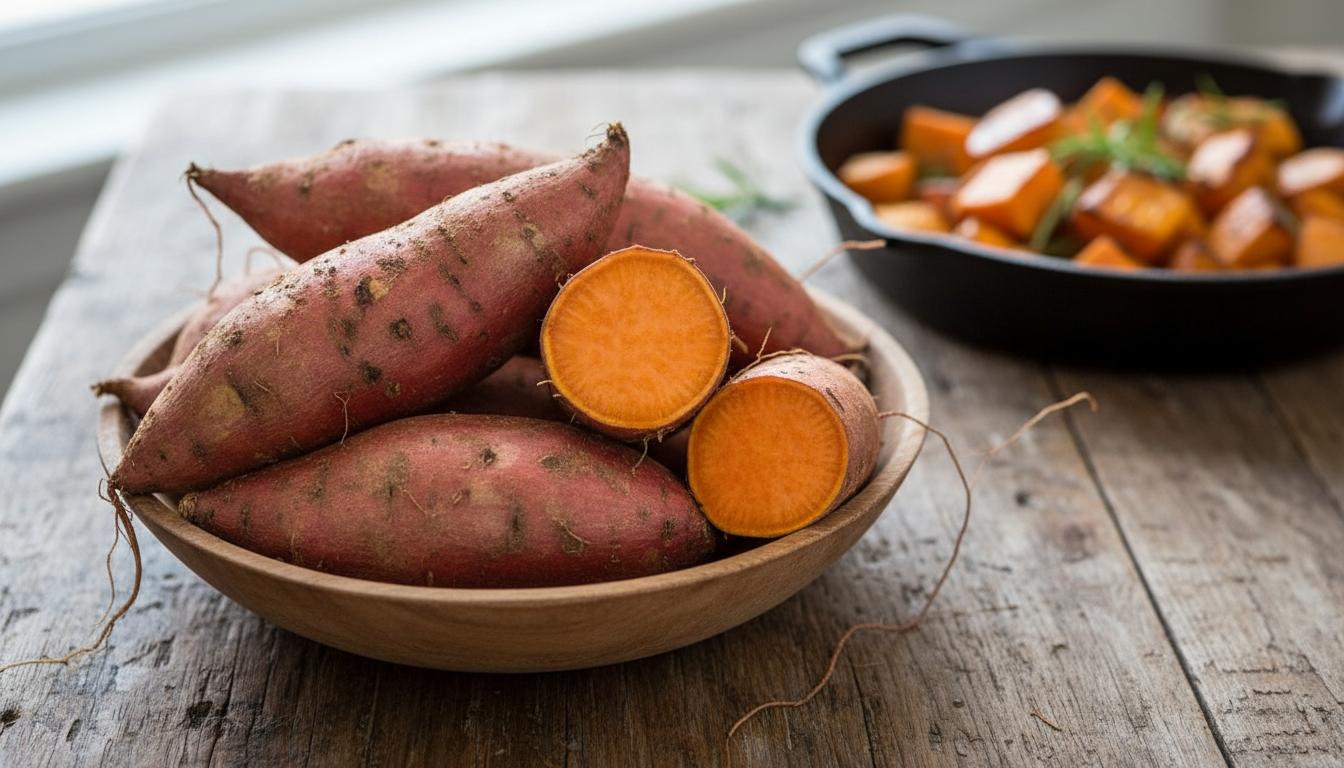
Kumara is more than a side dish in Aotearoa. It is a piece of history, a staple in home kitchens, and a reliable crop grown in the sands of Northland. This guide explains what kumara is, how it’s grown and cooked, the main New Zealand varieties, the pros and cons, and how to choose and use it well at home.
What is
Kumara (Ipomoea batatas) is the New Zealand name for sweet potato. It arrived with early Polynesian navigators centuries ago and became central to Māori agriculture and cuisine. You’ll see it spelled “kumara” in everyday use and “kūmara” in te reo Māori.
Botanically, kumara is a starchy, sweet-tasting tuber from a vine in the morning glory family. It’s not related to the common potato. In New Zealand, most kumara is grown in the Kaipara district around Dargaville, where sandy soils and a mild climate suit the crop.
Nutrition-wise, kumara is a source of fibre, vitamin C, and potassium. Orange-fleshed types are rich in beta-carotene (a vitamin A precursor). It is naturally gluten-free and low in fat. The glycaemic index is generally moderate and can be lower than that of standard potatoes, depending on cooking method and portion size.
How it works
From planting to plate, kumara follows a simple cycle:
- Propagation: New plants come from “slips” (shoots) rather than seeds. Growers cut slips from sprouted tubers and plant them into warm soil.
- Growing: The vine spreads over mounded rows. Underground, the plant stores energy as swollen roots (the kumara you eat). It needs sun, warmth, and free-draining soil.
- Season: Planting usually happens in spring. Harvest is late summer to autumn after around 120–150 days, before cold snaps.
- Curing: After harvest, kumara is gently warmed and dried for a short period. This healing step toughens the skin and converts some starch to sugar, improving sweetness and shelf life.
- Storage: Kept cool, dark, and dry (but not refrigerated), kumara can store well for weeks.
In the kitchen, heat unlocks kumara’s flavour. Roasting, baking, or air-frying caramelises natural sugars on the outside while keeping the inside soft. Boiling keeps flavours mild and is ideal for mashing and salads. Cooling cooked kumara before eating can increase resistant starch, which may help with a steadier blood sugar response.
Types / examples
New Zealand shops usually carry four main types of kumara. Each has its own texture and best uses.
- Red (often called Owairaka Red): Red skin, creamy white flesh, slightly sweet. Holds shape well.
- Gold (Toka Toka Gold): Golden skin and flesh, nutty flavour, versatile.
- Orange (commonly Beauregard): Orange skin and flesh, moist and sweet, great for baking and mashing.
- Purple (sometimes called Hawaiian): Purple skin, white to pale purple flesh, drier texture, earthy notes.
| Variety | Skin | Flesh | Taste & Texture | Best Uses | Notes |
|---|---|---|---|---|---|
| Red (Owairaka Red) | Deep red | Creamy white | Mildly sweet, firm, holds shape | Roasts, salads, hāngi, curries | Great when you don’t want it to fall apart |
| Gold (Toka Toka Gold) | Golden tan | Yellow-gold | Slightly nutty, medium moisture | Chips, wedges, roasting, pan-frying | Crisps up well in hot oil or air-fryer |
| Orange (Beauregard) | Orange | Deep orange | Sweeter, moist, creamy | Baking, mashing, soups, pies | Rich in beta-carotene |
| Purple (Hawaiian) | Purple | Pale, can be streaked | Earthy, drier, slightly fibrous | Stews, slow-cooks, mixed roasts | Stays firmer; not as sweet |
Pros and cons
- Pros
- Versatile: roast, mash, bake, boil, steam, grill, or air-fry.
- Nutritious: fibre, vitamin C, potassium; orange types add beta-carotene.
- Often gentler on blood sugar than standard potatoes when boiled or cooled.
- Locally grown: buying kumara supports New Zealand growers, especially in Northland.
- Stores well in a cool, dark cupboard.
- Cons
- Carb-dense: portions matter if you manage blood sugar.
- Price can swing with weather and harvests.
- Refrigeration damages texture and flavour; it needs pantry space.
- Some varieties turn soft if overcooked.
How to use or choose
Selecting good kumara
- Look for firm tubers with smooth, unbroken skin.
- Avoid cuts, deep bruises, or damp patches.
- Smaller to medium kumara cook more evenly than very large ones.
- Choose the variety for the job: Red for salads and roasts that keep shape, Orange for mash and baking, Gold for crispy chips, Purple for slow-cooked dishes.
Storing at home
- Keep in a cool, dark, dry cupboard (12–16°C is ideal).
- Do not refrigerate; cold turns the centre hard and can alter flavour.
- Give them airflow; a basket or paper bag is better than a sealed container.
- Use any damaged pieces first.
Prep and cooking ideas
- Roast: wedges or chunks with oil, salt, and pepper; add rosemary, cumin, or smoked paprika.
- Mash: boil until tender, then mash with butter or olive oil and a splash of milk; add nutmeg or miso for depth.
- Salad: boil or steam cubes, cool, and toss with herbs, greens, toasted seeds, and a lemony dressing.
- Hāngi or oven “hāngi-style”: slow-roast wrapped pieces with other root veg and a touch of smoke.
- Soup: orange kumara blends into a silky base with onion, ginger, and coconut milk.
- Chips: thin slices of Gold kumara baked or air-fried until crisp.
Step-by-step: Crispy roasted kumara wedges
- Heat oven to 220°C fan bake. Preheat a tray inside.
- Scrub 1 kg kumara; leave skin on. Cut into thick wedges.
- Pat dry. Toss with 2 tbsp oil, 1 tsp salt, pepper, and 1 tsp smoked paprika or cumin.
- Optional: add 1 tbsp cornflour for extra crunch; toss well.
- Spread wedges on the hot tray without crowding.
- Roast 15 minutes, flip, then roast 10–15 minutes more until browned.
- Finish with fresh rosemary and a squeeze of lemon.
- Serve hot with yoghurt-tahini sauce or aioli.
Smart swaps and pairings
- Swap half the potatoes in a roast with kumara for colour and sweetness.
- Pair with protein and greens: grilled fish and a watercress salad balance the sweetness.
- Spice loves kumara: try harissa, garam masala, or chilli-lime.
- For lunchboxes, roast extra kumara and add to grain bowls through the week.
FAQ
Is kumara the same as sweet potato?
Yes. Kumara is the New Zealand name for sweet potato. Different countries favour different varieties, which is why texture and sweetness can vary.
Which kumara is best for roasting?
Red and Gold hold shape well and crisp at the edges. Orange roasts nicely too but stays softer and sweeter inside.
Can I eat the skin?
Yes. The skin is edible and adds fibre and flavour. Scrub well and trim any rough spots.
How do I store kumara?
Keep it in a cool, dark, dry place with airflow. Do not refrigerate. Use within a few weeks for best flavour.
Is kumara good for people watching their blood sugar?
Portion size and cooking method matter. Boiled or roasted-and-cooled kumara can have a gentler impact than some white potatoes. Work with your usual serving size and talk to your health professional if you manage diabetes.
Are the leaves edible?
Yes, kumara leaves are edible and used in many cuisines. They taste similar to spinach when sautéed. In New Zealand they’re less common in shops but can be eaten if you grow your own.
Why does my kumara turn mushy?
Overcooking or very high moisture can cause this. Choose firmer varieties like Red for salads, and avoid overcrowding the roasting tray so steam can escape.
How do I get crisp kumara chips?
Use Gold kumara, slice evenly, pat dry, toss with a little oil and salt, spread out on a hot tray, and cook at high heat. A light dusting of cornflour adds crunch.
Where is kumara grown in New Zealand?
Mainly in Northland, especially the Kaipara district around Dargaville, thanks to warm weather and sandy soils.
Can dogs eat kumara?
Plain, cooked kumara in small amounts is generally fine for most dogs. Avoid salt, butter, and seasonings. If in doubt, check with your vet.
How it works
From soil to supermarket in New Zealand
Growers plant slips in spring, manage weeds and irrigation through the warm months, and harvest before the first cold snaps. After curing, kumara is graded by size and quality, then sent to markets and supermarkets nationwide. Weather swings—especially too much rain—can affect shape, yield, and price.
How cooking changes kumara
- Roasting caramelises surface sugars for deeper flavour.
- Boiling keeps flavours gentle and reduces browning.
- Cooling after cooking increases resistant starch, which can be beneficial for gut bacteria.
- Fats carry flavour: a little olive oil or butter makes herbs and spices bloom.
Final tips for New Zealand kitchens
- Match variety to method: Red for structure, Orange for mash and bakes, Gold for chips, Purple for stews.
- Season simply: salt, pepper, oil, and heat do most of the work. Add herbs at the end for a fresh lift.
- Cook once, eat twice: roast a big tray of kumara on Sunday for fast lunches all week.
- Waste less: keep the skins on, and turn leftovers into frittatas, salads, or soups.