
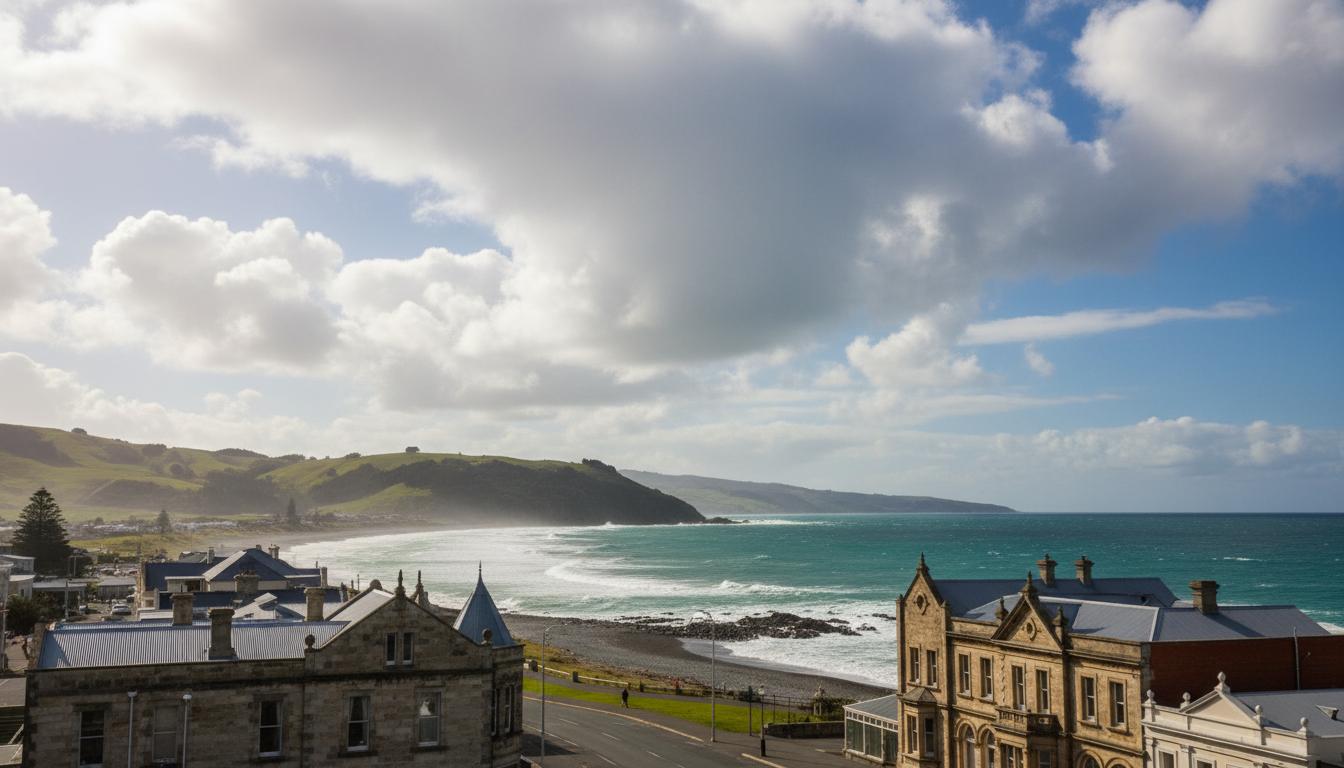
Oamaru weather can surprise you. One day it feels like summer, the next a cool southerly cuts across the town and the sea fog rolls in. This guide explains the patterns that shape Oamaru’s climate, seasonal examples, practical pros and cons for visitors and residents, and clear steps to plan trips or daily activities. Read on for quick facts, a comparison with nearby cities, packing lists, and answers to common questions.
What is Oamaru weather?
Oamaru weather refers to the local climate and short-term conditions on the east coast of North Otago, South Island. The town sits close to the Pacific Ocean, about halfway between Dunedin and Timaru, and experiences a cool-temperate maritime climate. That means moderate temperatures year-round, fewer extremes than inland New Zealand, and a weather pattern strongly influenced by the sea and passing frontal systems.
Summers are generally mild; winters are cool with regular frosts and occasional snow. Rainfall is moderate and often comes in bands with frontal systems, not continuous downpours. Wind and sunshine can change quickly, which is typical of coastal New Zealand towns.
How it works
Key drivers of Oamaru weather
- Maritime influence: The Pacific Ocean moderates temperatures and feeds moisture into the air.
- Frontal systems: Low-pressure fronts from the Tasman Sea and Southern Ocean bring most rain and clouds.
- Nor’west winds: Warm, dry nor’westers can raise temperatures and clear skies briefly.
- Southerly winds: Cold southerly flows bring chill, showers, and sometimes snow in winter.
- Local topography: Coastal plains and nearby hills create microclimates—sunny pockets and sheltered valleys differ noticeably.
How to read a forecast for Oamaru
Weather forecasts for Oamaru combine synoptic charts (pressure systems), radar for short-term showers, and local observations. For most activities, check:
- Short-term radar (next 6–12 hours) for showers and gusty winds
- 24–72 hour forecast for temperature swings and frontal passages
- Marine forecasts if you plan to go near the coast
Look for keywords: “cold southerly” (bring a warm layer and expect showers), “nor’west” (possible gusty dry winds), and “exposed coastal gales” (shelter and avoid small boats).
Types / examples
Summer (December–February)
Summers in Oamaru are mild to warm. Typical days reach the high teens to low twenties Celsius. Expect sunny spells, pleasant sea breezes, and occasional nor’west warm spells. Rain tends to fall in short bursts with passing fronts.
Autumn (March–May)
Autumn brings crisp mornings and stable sunny afternoons when high pressure sits over the region. It’s a popular time for clear skies and golden light, but be ready for sudden cool fronts.
Winter (June–August)
Winters are cool. Daytime temperatures commonly sit around 8–12°C while nights drop to near freezing. Frost is typical and light snow can fall — usually brief and more likely inland or on nearby hills than on the coast. Strong southerlies make it feel colder.
Spring (September–November)
Spring is the transition month with volatile swings: warm sunny days, sudden southerlies, and occasional late frosts. Vegetation responds quickly, and the light is often very clear after westerly fronts pass.
Extreme events
- Gales: Coastal gales sometimes reach strong levels; secure outdoor gear and heed advisories.
- Cold snaps: When polar air moves north, temperatures fall and snow can occur inland.
- Storm bands: Heavy rain bands can produce brief, intense showers but widespread flooding is uncommon compared with the West Coast.
Pros and cons
Pros
- Mild summers—comfortable for outdoor activities and sightseeing.
- Clear light most autumn and spring days—the reason photographers like Oamaru.
- Lower rainfall than the West Coast—less chance of long wet spells.
- Easy access to coastal and inland attractions year-round.
Cons
- Windy days can make it feel colder than the thermometer shows.
- Winter frosts and occasional snow can disrupt rural roads and services.
- Rapid weather changes—plans may need flexible timing.
How to use or choose
If you’re planning a visit, moving to Oamaru, or deciding on outdoor activities, follow these practical steps to make good choices based on the weather.
- Check a 7-day forecast from MetService or NIWA to spot frontal passages.
- Look at local radar and wind maps the day before for rain and strong winds.
- Choose activities for the warmest part of the day—often late morning to mid-afternoon.
- Pack layers: a windproof outer shell, warm mid-layer, and a sun hat for summer.
- Plan indoor alternatives on high-risk days (museums, cafes, galleries).
- If boating or fishing, consult marine forecasts and local harbourmasters.
- Allow extra travel time in winter for frosts and occasional snow on rural roads.
Below are quick packing and planning tips tailored to the most common situations you’ll face.
- Day trips: Lightweight layers, sunscreen, a light waterproof jacket.
- Winter stays: Warm base layers, insulated jacket, thermal socks, and for early mornings a beanie.
- Coastal activities: Windproof jacket, sturdy footwear, and a reminder that coastal wind makes shade less necessary but warmer layers essential.
Comparison table: Oamaru vs nearby cities
| Town | Typical summer high (°C) | Typical winter low (°C) | Annual rainfall (approx.) | Sunshine & wind |
|---|---|---|---|---|
| Oamaru | 18–22°C | 0–4°C | Moderate (lower than west coast) | Good sunshine; breezy to windy |
| Dunedin | 16–20°C | 0–3°C | Moderate to high | Cloudier; coastal winds common |
| Christchurch | 20–25°C | 1–4°C | Moderate | More sunshine; can have strong nor’west winds |
FAQ
When is the best time to visit for good weather?
Late summer and autumn (February–April) offer the most settled weather, pleasant temperatures, and clear afternoons—great for photography and outdoor walks.
Does Oamaru get a lot of rain?
Not compared with the West Coast. Rain comes in bands with frontal systems, so you can have long sunny stretches interrupted by short, sometimes heavy, showers.
Will it snow in Oamaru?
Snow near sea level is uncommon but not impossible. You’re more likely to see dustings on nearby hills. Cold snaps do bring snow some winters.
How windy is Oamaru?
Coastal breezes are common. Nor’westers and southerlies can be strong; check wind forecasts if you plan to be on the water or in exposed areas.
Where do I find reliable forecasts for Oamaru weather?
Use MetService and NIWA for official forecasts, local radar for short-term showers, and coastal/marine forecasts when near the ocean. Local news and surf clubs also post warnings during severe events.
Any safety tips for extreme weather?
- During gales, avoid cliff edges and loose objects outdoors.
- In heavy rain, be cautious on rural roads—drainage can be uneven.
- If boating, obey marine warnings and check local harbourmaster advice.
Wrap-up
Oamaru weather is changeable but largely forgiving. Mild summers, crisp autumns, and cool winters make it easy to plan around the elements if you check forecasts and pack smart. Whether you’re visiting the Victorian precinct, watching blue penguins at dusk, or driving the coast, a little preparation makes the difference between getting caught off guard and enjoying the unique light and seasons this part of New Zealand offers.