
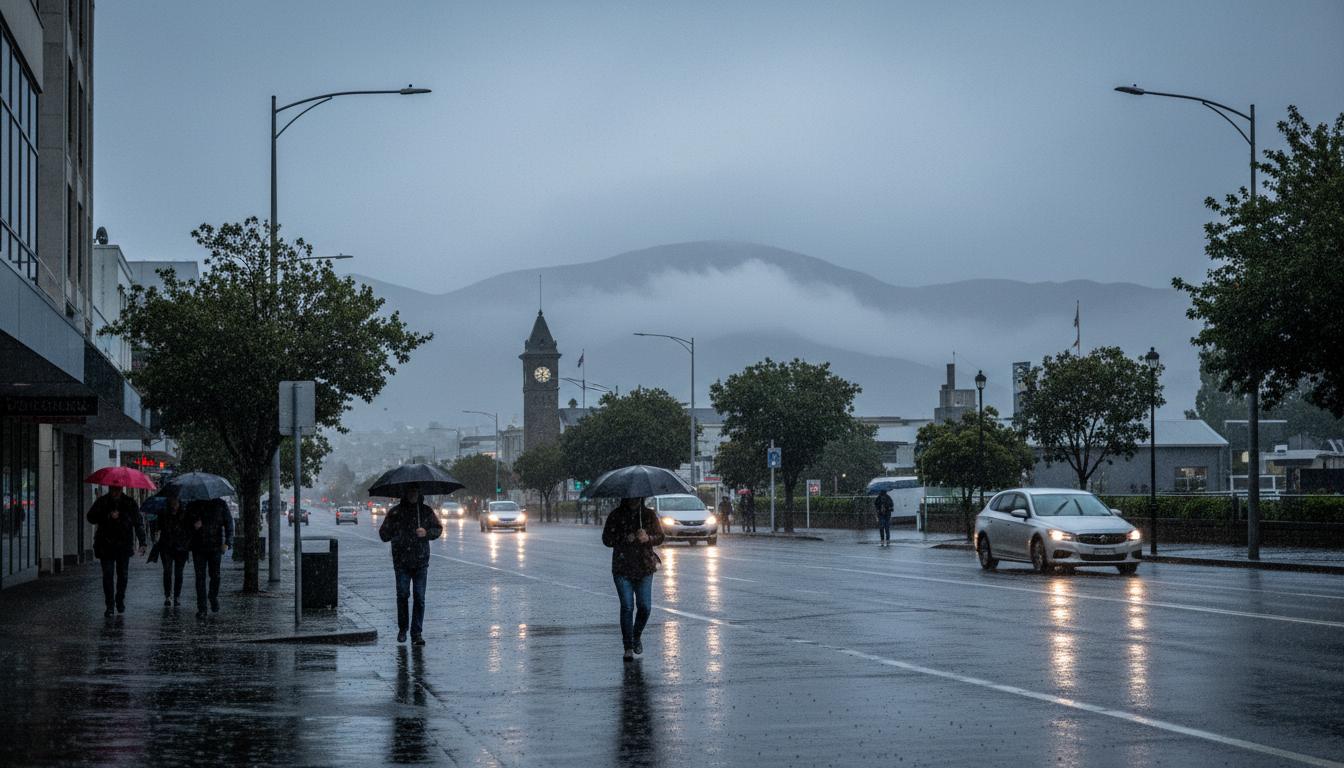
Planning a trip or simply wondering what to wear tomorrow? Weather Palmerston North matters whether you live here, commute through, or are driving the Manawatū. This guide explains the local climate, how forecasts work, practical examples, and how to choose the right source for reliable predictions.
What is weather Palmerston north
Weather Palmerston North describes the short-term atmospheric conditions in and around the city of Palmerston North, located in the Manawatū-Whanganui region of New Zealand. It covers temperature, rainfall, wind, humidity, cloud cover, and severe events.
The city sits near the Manawatū River and lies between the Ruahine and Tararua ranges. That geography shapes local patterns like wind funnelling and sudden temperature swings.
Key climate facts
- Temperate climate with four distinct seasons.
- Average annual rainfall about 1,100 mm, with wetter months in winter and spring.
- Summer highs often reach 22–26°C; winter lows typically 2–6°C.
- Nor’west winds bring warm, dry conditions; southerlies bring cooler, wetter weather.
How it works
Understanding weather Palmerston North means knowing how forecasts are made and how geography affects local conditions.
How forecasts are made
Forecasters use three basic inputs: observations, models, and human expertise.
- Observations come from weather stations, radar, satellites and sensors across the region.
- Numerical weather prediction models simulate the atmosphere using physics and current data.
- Meteorologists adjust model runs for local effects like hills, river valleys and sea influence.
Short-term forecasts (nowcasts and next 24 hours) rely heavily on high-resolution radar and local knowledge. Medium-range forecasts (2–7 days) use global and regional models. Long-range outlooks focus on trends, not exact daily details.
Local influences on weather Palmerston North
The Tararua and Ruahine ranges act as weather modifiers. They can:
- Block or channel winds, producing strong gusts in the city.
- Create rain shadows and microclimates in nearby valleys.
- Cause rapid temperature drops when cold southerlies push through.
Types / examples
Weather Palmerston North swings between clear, calm days and brisk, changeable conditions. Here are common scenarios.
Summer example
A typical summer day: warm morning, a northerly breeze picks up, afternoon highs near 24°C, then cooler after sunset. Humidity is usually moderate.
Autumn example
Autumn often brings stable days with crisp mornings. Rain can increase with passing fronts. Early frosts appear in late autumn some years.
Winter example
Winters are cool and wetter. Expect cloudy days, regular rain, and overnight lows often dropping to around 2–4°C. Frosts occur in outlying areas.
Spring example
Spring is changeable. A warm nor’west can be followed by a cold southerly the same week. Gardeners should be ready for late frosts.
Severe weather examples
- Heavy rainfall events causing local flooding, especially near streams and low-lying suburbs.
- Strong nor’west winds creating gusts that can bring debris onto roads.
- Cold snaps with frosty mornings and black ice on bridges during clear winter nights.
Pros and cons
Palmerston North’s weather has advantages and downsides. Knowing both helps residents and visitors plan better.
Pros
- Mild summers—rarely extreme heat.
- Distinct seasons, which many people enjoy for outdoor events and farming cycles.
- Good agricultural conditions for dairy, cropping and horticulture.
Cons
- Unpredictable spring weather can disrupt planting and outdoor plans.
- Windy days and sudden southerlies can feel raw and bring rain quickly.
- Flood risk in low-lying and river-adjacent areas during heavy rain.
How to use or choose
Choosing the right weather source and using forecasts effectively will save time and reduce stress.
How to choose a weather source
| Provider | Update frequency | Strengths | Best for |
|---|---|---|---|
| MetService | Hourly | Official forecasts, severe weather warnings, radar | General public, travel planning, warnings |
| NIWA | Daily / as needed | Climate research, long-term outlooks, regional expertise | Farmers, researchers, season planning |
| WeatherWatch | Several times daily | Local commentary, quick updates, accessible language | Residents who want local insight |
| Private apps (e.g., MetService app, Yr, AccuWeather) | Minutes to hourly | Push alerts, personalized settings, radar overlays | On-the-go users, commuters |
How to use forecasts for everyday decisions
- Check the 3-day forecast the evening before to plan clothing and travel.
- Look at the hourly radar in the morning if you have outdoor work or events.
- Monitor warnings from MetService for heavy rain or strong winds.
- Use long-range NIWA outlooks for farming, gardening, or event planning.
- Set app alerts for sudden changes during travel or long drives on SH1.
Preparing for specific situations
- Driving in heavy rain: reduce speed, turn on lights, avoid standing water.
- Outdoor events: choose sheltered venues or have contingency plans for wind and rain.
- Gardening: protect seedlings in spring from late frosts; mulch to retain moisture in summer.
FAQ
What is the best app for weather Palmerston North?
There’s no single best app for everyone. For official warnings, use MetService. For quick local updates, WeatherWatch is useful. Combine one official source and one app with push alerts to cover both warnings and convenience.
When is Palmerston North most likely to get heavy rain?
Heavy rain events are more common in winter and spring, often tied to slow-moving fronts or ex-tropical systems approaching from the northwest. Localised downpours can occur any time with convective activity in warm months.
How accurate are local forecasts?
Short-term forecasts (up to 24 hours) are typically quite accurate, especially for temperature and wind direction. Accuracy drops for precise precipitation timing beyond 3–5 days. Local topography can cause small-scale differences not captured by broad models.
Can winds suddenly change in Palmerston North?
Yes. Passing fronts and the funneling effect of nearby ranges can cause rapid wind shifts and gusts. This is a common feature of weather Palmerston North.
How should I prepare for floods?
Know your local flood risk. Keep emergency kits ready, have a family plan, and follow MetService and local council warnings. Move vehicles and valuables to higher ground if advised.
Where can I find live radar and warnings?
MetService provides live radar and official warnings. NIWA and some apps also offer radar and regional alerts. Local council websites post preparedness information during severe events.
Quick tips for daily life in Palmerston North
- Dress in layers—mornings can be cool, afternoons warm.
- Check radar before leaving for outdoor jobs or weekend hikes.
- Keep an eye on river levels if you live near the Manawatū River.
- Use sun protection in summer—UV can be strong even on cool days.
Weather Palmerston North changes with the seasons and the sky. With the right sources and a little local knowledge, you can plan confidently, stay safe, and enjoy everything the region offers—rain or shine.