
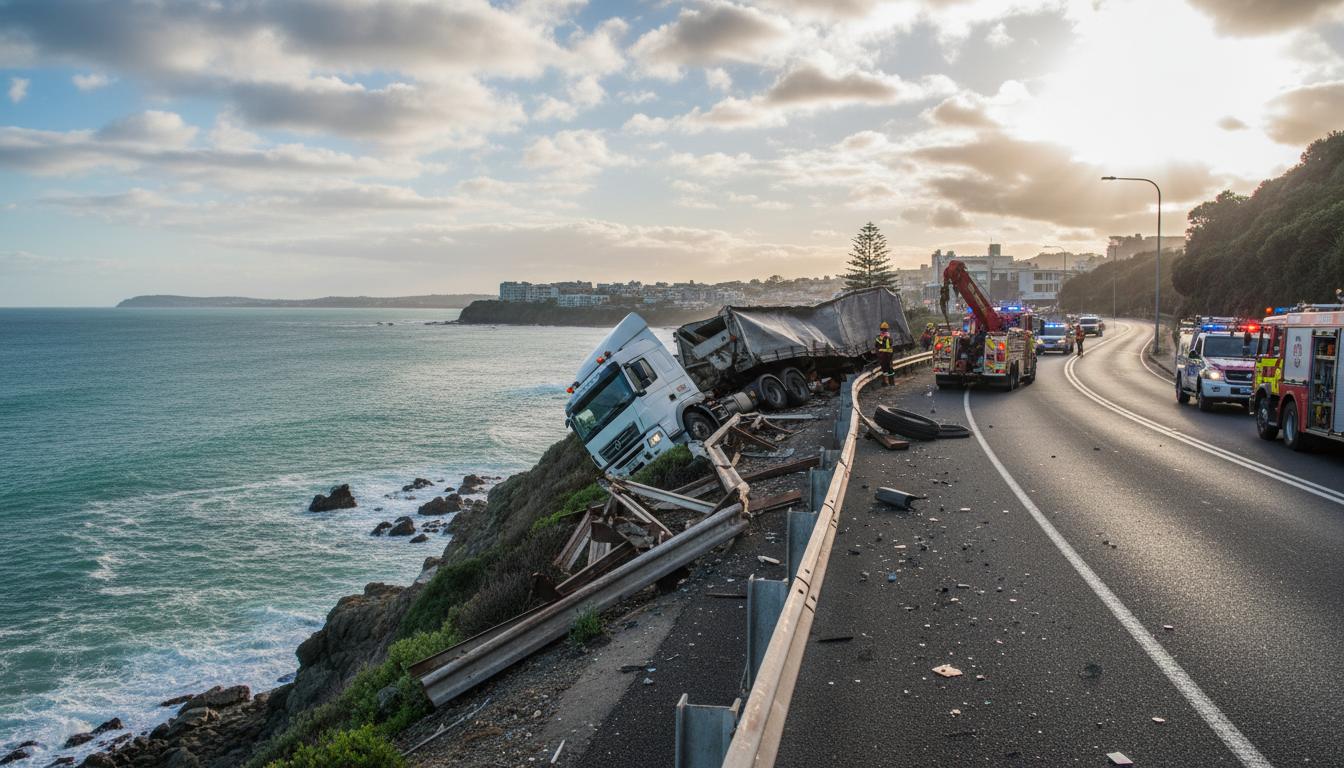
A truck crash in Napier can stop traffic, damage freight, and threaten lives. This guide explains, in plain language, what happens after a truck crash Napier, how emergency and recovery systems work, and what drivers, fleet managers and victims should do next. Read on to learn step-by-step actions, who to contact, and common pitfalls to avoid.
What is a truck crash Napier?
A “truck crash Napier” means any road collision in the Napier area involving a heavy vehicle. That covers a wide range of events: a minor bumper hit in town, a tipper rollover on a rural link road, a container falling near the Port of Napier, or a multi-vehicle crash on a state highway.
Truck crashes differ from car crashes because trucks carry heavy loads, can jackknife or roll, and often affect freight and infrastructure. They may also involve hazardous goods, requiring specialist response and clean-up.
How it works
Emergency response and scene safety
When a truck crash Napier occurs, the first priority is safety. Call 111 for life-threatening injury or major incidents. Police and ambulance triage the scene; fire crews may be needed for fuel leaks or extrications.
Police secure the scene and manage traffic. If hazardous goods are involved, emergency responders call specialist hazmat teams and coordinate with Waka Kotahi and local council for road closures and clean-up.
Investigation and reporting
Police investigate causes when there are injuries, significant damage, or criminal concerns. For workplace crashes or serious harm, WorkSafe NZ may open an inquiry. Road and infrastructure issues are reported to Waka Kotahi (state highway authority) or Napier City Council (local roads).
Insurance, ACC and drivers
In New Zealand, personal injuries from a truck crash Napier are normally covered by ACC (Accident Compensation Corporation). Vehicle and cargo damage are handled through insurers. Drivers must report incidents to their employer, insurer and, where required, to Police.
Types / examples
Understanding common types helps you prepare. Below are typical truck crash scenarios seen around Napier and similar regional centres.
- Minor urban collisions: Low-speed impacts at intersections or while parking.
- Rollover: Tip-truck or trailer rollovers on corners or uneven surfaces.
- Jackknife: Tractor and trailer folding under braking, common in slippery conditions.
- Runaway truck: Brake failure on steep descents, potentially on rural state highways.
- Multi-vehicle crashes: Truck colliding with several cars, often leading to road closures.
- Hazardous goods spill: Fuel, chemicals or agricultural inputs requiring hazmat response.
Local context — why Napier matters
Napier’s mix of urban streets, nearby state highways and the working Port of Napier increases heavy vehicle activity. Freight movements to and from the port and industrial zones raise the exposure to truck crashes, especially during peak harvest and export periods.
Pros and cons
“Pros and cons” here compare different responses after a truck crash Napier — staying at the scene and settling informally versus formally reporting and lodging claims. Both have implications for safety, liability and recovery.
Stay and settle informally
- Pros:
- Quick resolution for minor damage.
- Avoids towing delays and brief police involvement.
- Cons:
- Risk of hidden damage or delayed injury—legal and medical claims may be harder later.
- No formal record can complicate insurance or workplace claims.
Report formally and involve authorities
- Pros:
- Proper documentation for ACC and insurance claims.
- Ensures hazardous spills and unsafe vehicles are managed correctly.
- Cons:
- More time at the scene while police investigate.
- Possible delays to freight and business operations.
How to use or choose
Deciding how to respond to a truck crash Napier depends on safety, legal obligations and business needs. Use the checklist and steps below to make quick, correct choices.
On-scene: 8 essential steps
- Stop safely and switch on hazard lights.
- Call 111 if anyone is injured or if there’s a major obstruction.
- Move to a safe place if the truck is unstable or leaking fuel.
- Render first aid only if safe and you are trained.
- Exchange driver and vehicle details with other parties.
- Take photos of the scene, vehicle damage, road markings and signage.
- Report the crash to your employer and insurer as soon as possible.
- If hazardous cargo is present, keep clear and wait for specialist responders.
Choosing a recovery service
For heavy recovery in Napier, pick providers with heavy-lift equipment and New Zealand Transport Agency experience. Ask about:
- Vehicle recovery capacity (tonnage, trailers).
- Experience with hazardous materials and rollovers.
- Availability and response time.
- Insurance and indemnity cover.
Choosing legal or technical help
If injuries, cargo loss or regulatory issues arise, consider these choices:
- ACC for personal injury support and rehabilitation.
- Insurer-appointed adjusters for vehicle and cargo claims.
- WorkSafe for workplace-related serious incidents.
- Specialist transport lawyers for disputes over liability or serious long-term effects.
Comparison table: common crash types and immediate actions
| Crash type | Typical cause | Immediate action | Authority to contact |
|---|---|---|---|
| Minor urban collision | Low speed, misjudgement | Move to safety, exchange details, photograph | Police if injury or dispute |
| Rollover | Sharp turn, overload, uneven load | Evacuate, secure scene, call 111 | Police, fire, specialised recovery |
| Hazardous goods spill | Container failure, crash force | Keep clear, warn others, call 111 | Fire, hazmat, Waka Kotahi |
| Runaway truck | Brake failure | Use escape lanes, call 111, warn traffic | Police, transport recovery |
FAQ
Do I always need to call Police for a truck crash Napier?
If there are injuries, death, major damage, dangerous driving, or suspected criminal behaviour, call 111 and wait for Police. For minor damage with no injury, exchanging details and reporting to your insurer may suffice—but document everything.
Who pays for road repairs after a truck crash?
Cost responsibility depends on liability. If a driver or operator caused the crash, their insurer may cover repairs. Waka Kotahi or Napier City Council arrange immediate safety work and then seek recovery from liable parties.
What about cargo loss or damage?
Cargo claims are handled through freight insurance and the shipper’s terms. Photograph cargo, record load details and notify the freight company and insurer promptly.
Can I claim ACC after a truck crash Napier?
Yes. ACC provides support for personal injuries sustained in road crashes. Seek medical attention and lodge an ACC claim early to ensure access to treatment and support.
When should WorkSafe be notified?
WorkSafe is notified for serious workplace incidents involving harm to workers. If the crash occurred during work duties and caused serious injury or death, employers must report it to WorkSafe.
Final checklist — quick reference for drivers and fleet managers
- Stop, secure and protect the scene.
- Call 111 for emergencies; call Police for serious crashes.
- Collect names, contact and vehicle details; photograph everything.
- Notify employer, insurer and cargo owner.
- Preserve evidence and don’t admit liability at the scene.
- Follow ACC and medical advice for injuries.
- Engage qualified heavy recovery and hazmat teams when needed.
A truck crash Napier is stressful, but prompt, calm action reduces harm and speeds recovery. Keep this guide handy, train drivers on the steps above, and ensure your fleet has clear reporting procedures. Safety and good documentation protect lives, cargo and your business reputation.