
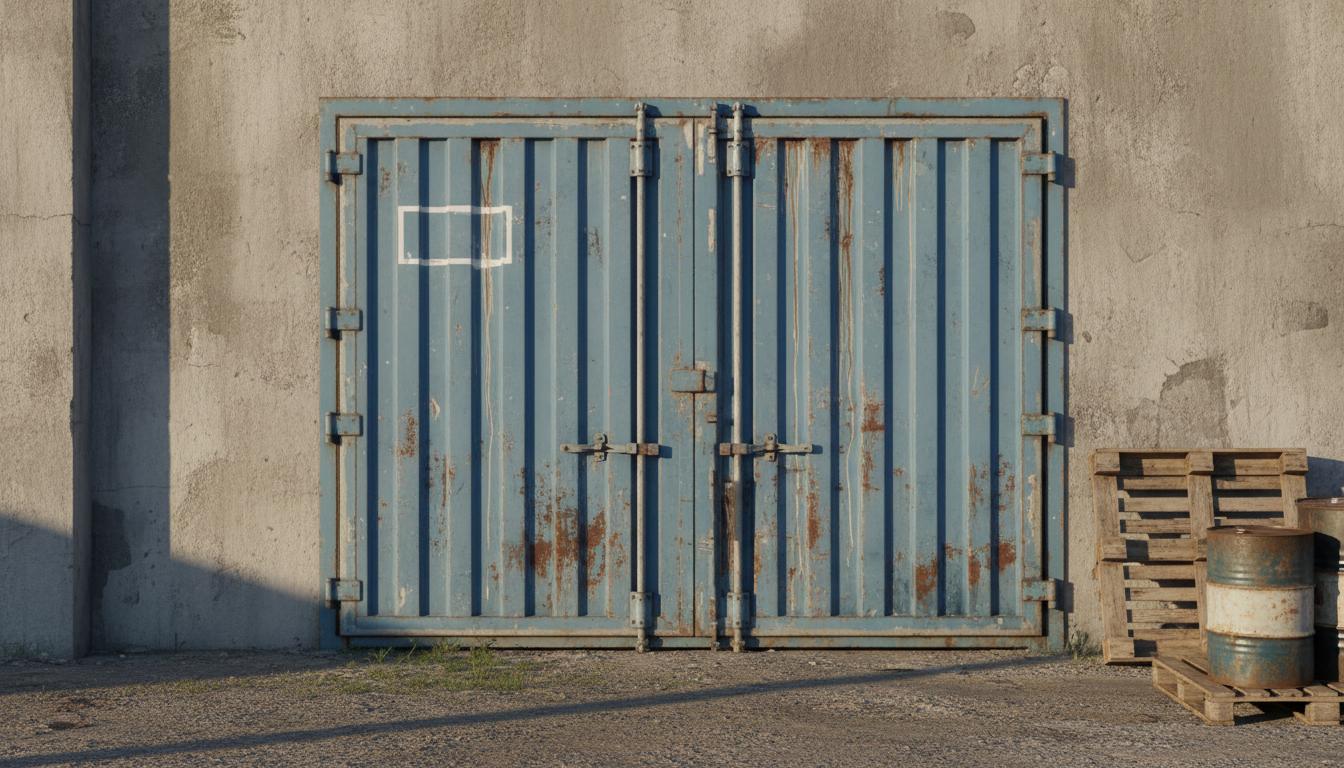
Whether you own a shipping container as a backyard shed, a workshop, or part of a commercial fleet, the container door is the key to security, weather protection, and daily use. This guide explains what a container door is, how it works, the main types you’ll see in New Zealand, and practical steps to choose, maintain, and upgrade doors for long life and better security.
What is a container door?
A container door is the access panel fitted to a shipping container. On standard containers, the door usually refers to the pair of steel barn-style doors on one short end.
These doors are heavy-gauge steel and include locking bars, hinges, seals and handles built to withstand transport and rough handling. They form the main barrier between the container interior and weather, pests and theft.
Common terms you’ll hear
- Door leaf — each of the two panels in a standard end door.
- Locking bar — vertical rods that secure the door into the frame.
- Gasket or seal — rubber strip that keeps water and wind out.
- Cam keepers — metal fittings in the frame that the locking bars engage with.
- Lockbox or hasp — additional security items mounted over the lock.
How it works
The basic mechanics of a container door are simple and rugged. A typical sequence when closing a door shows how components work together.
- Swing each door leaf closed until the hooks or latches meet the cam keepers.
- Rotate the locking bars downward so the cams engage with the keepers.
- Turn the handles into their final position against the frame.
- Fit a padlock, bolt seal or lockbox to secure the handles.
Hinges and gaskets ensure the door stays aligned and weather-tight. On refrigerated containers, doors also include heavy seals and insulation to maintain temperature control.
Security and weatherproofing
- Lockboxes protect padlocks from bolt cutters and angle grinders.
- Cam keepers and full-length locking bars distribute force across the frame for strength.
- Seals compress when doors close to shed rain and stop wind-driven moisture.
Types / examples
Not all container doors look the same. Your choice depends on use, location and budget.
- Standard end doors — the classic double barn doors fitted to most shipping containers.
- Side doors — single or double doors fitted into a container side for easier access.
- Roll-up doors — like a garage door, useful for frequent access and vehicle entry.
- Sliding doors — slide along the side for wide openings without swing space.
- Refrigerated (reefer) doors — insulated, with robust seals and extra lock fittings.
- Security-reinforced doors — steel plates, internal hinges, and lockboxes for high-risk sites.
Examples of typical uses
- Storage container: Standard end doors with a lockbox and dehumidifier.
- Workshop: Side door combined with roll-up on the end for vehicle access.
- Pop-up shop: Sliding or roll-up doors to create an open frontage.
- Reefer container: Special door with gasket and alarm-ready fittings.
Comparison table: common container door types
| Type | Best for | Security | Weatherproof | Typical cost |
|---|---|---|---|---|
| Standard end doors | General storage; transport | High with lockbox | Good with intact seals | Low (standard fit) |
| Side door | Frequent human access | Medium | Good | Moderate (mod required) |
| Roll-up door | Workshops; retail access | Medium to high | Fair (depends on installation) | High (retrofit) |
| Sliding door | Wide openings; limited swing | Medium | Variable | High |
| Reefer door | Temperature-controlled cargo | High | Excellent | Very high |
Pros and cons
Advantages of a good container door
- Durable — steel construction lasts years under heavy use.
- Secure — strong locking bars and lockboxes resist break-ins.
- Weather-resistant — proper seals keep contents dry.
- Low maintenance — basic upkeep prevents common issues.
Disadvantages and limitations
- Heavy — doors can be awkward to open without assistance.
- Rust — coastal or rainy sites speed corrosion if not painted and sealed.
- Modification cost — adding side doors or roll-ups costs time and money.
- Thermal bridging — standard doors need upgrades for insulated living spaces.
How to use or choose a container door
Choosing the right door starts with asking the right questions. Below is a clear step-by-step plan to help decide and act.
- Define use: storage, workshop, retail or refrigerated cargo.
- Measure access needs: width, height and swing space required.
- Check site: coastal, covered, or on a trailer — this affects corrosion protection.
- Decide on security level: basic padlock, lockbox, or reinforced door.
- Set a budget including installation and maintenance.
- Consult suppliers for available door types and local NZ installers.
- Plan maintenance: paint, lubricate hinges, replace seals annually as needed.
Installation tips
- Hire a fabricator for side door or roll-up retrofits — reputable installers brace frames to avoid distortion.
- Use marine-grade paint or hot-dip galvanizing for coastal environments.
- Fit a lockbox and consider tamper alarms or CCTV for high-value contents.
- Apply a continuous rubber gasket across the frame for better weatherproofing.
Maintenance checklist
- Monthly: inspect locks, hinges and seals; clear debris from threshold.
- Every 6 months: lubricate locking bars and hinges, check seal compression.
- Annually: touch up paint, sand and treat any surface rust, renew gasket if brittle.
FAQ
What size is a standard container door?
Standard 20ft and 40ft containers use end doors sized to the container width and height. Typical clear openings are about 2.34 m wide for a 20ft and 2.34–2.35 m for a 40ft, with height around 2.28 m for standard containers. High-cube containers add about 300 mm height.
How do I secure a container door in New Zealand?
Use a heavy-duty lockbox, hardened padlock, and ensure locking bars are intact. Consider welding a steel plate inside the lock area or fitting a cylinder lock designed for containers. For commercial sites, use sealed bolt seals and alarms.
Can I change the container door to a roll-up or side door?
Yes. A professional fabricator can cut and reinforce the frame, fit the new door, and ensure structural integrity. This is common for conversions but costs more than simple upgrades.
Do I need building consent to modify container doors?
In New Zealand, small, temporary containers used as storage often don’t need consent. However, if the container becomes a permanent structure, a living space, or affects foundation and safety, local council rules may require consent. Always check with your local council before significant modifications.
How do I keep water out of a container door?
Ensure seals are intact and compressed correctly when closed. Fit a continuous gasket, keep the threshold clear, and maintain paint to stop corrosion around the frame. Tilt or site the container slightly so water does not pool at the threshold.
What’s the best door type for a coastal site?
Reinforced and galvanized doors with marine-grade paint perform best. Use stainless steel hardware where possible and increase maintenance frequency to manage corrosion from salt air.
Final tips
A container door is more than an opening; it’s the single most important feature for security and weather protection. Match the door type to how you’ll use the container, invest in proper seals and locks, and keep a simple maintenance routine. With the right choices, your container door will protect contents and serve reliably for years across New Zealand’s varied climates.