
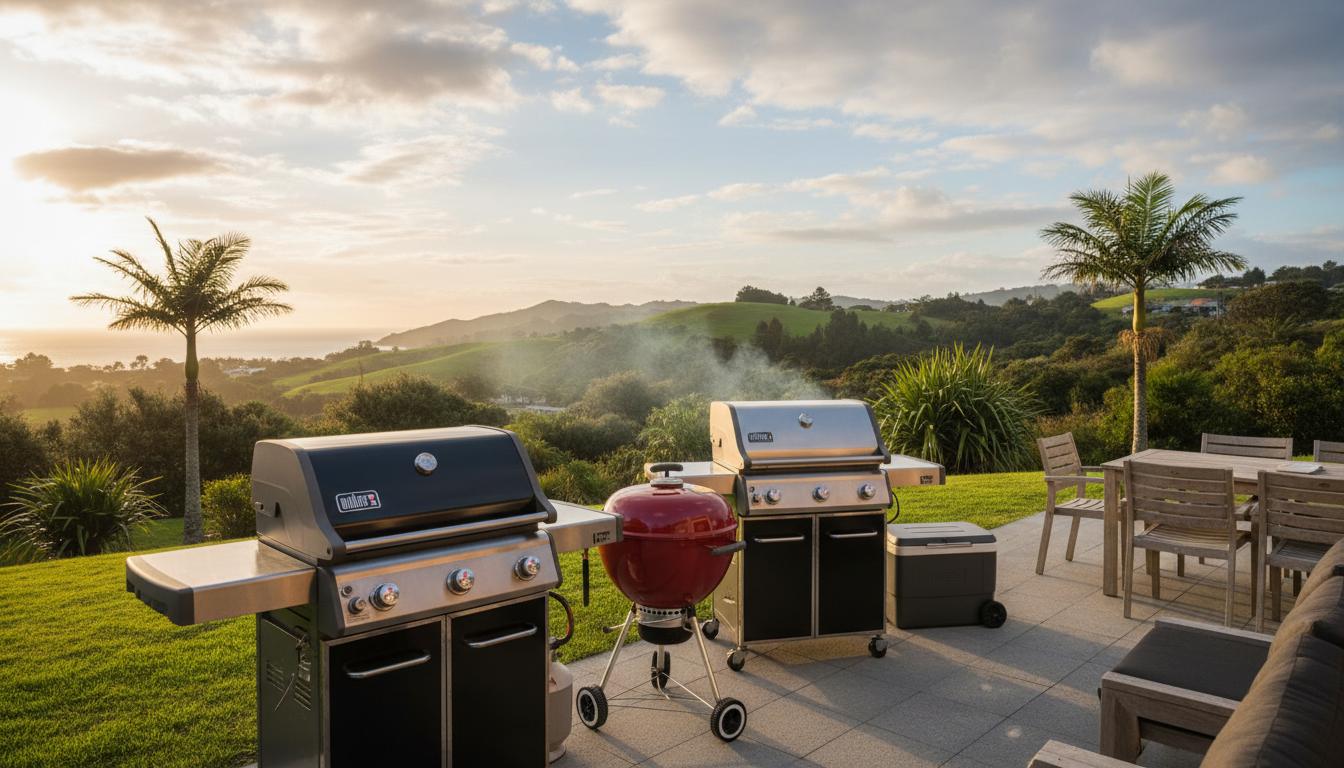
If summer in Aotearoa smells like anything, it’s a hot grill and sea breeze. This guide to Weber BBQ NZ walks you through what Weber is, how its barbecues work, the main models sold here, and how to pick the right one for your home, deck, or bach. You’ll also find a quick-start cooking method, a comparison table, and clear answers to common questions New Zealanders ask before they buy.
What is
Weber is a global barbecue brand best known for the classic Kettle charcoal grill and a wide range of gas and pellet models. In New Zealand, Weber BBQs are popular because they’re durable, easy to control with the lid down, and supported by a strong network of authorised retailers and service. Whether you want a compact Weber Q for weeknight steaks or a bigger Genesis for entertaining, there’s a model that suits NZ backyards, balconies, and baches.
When people search for “weber bbq nz,” they’re usually deciding between charcoal and gas, figuring out the right size for a 9kg LPG bottle setup, or choosing accessories to tackle Kiwi favourites like snapper, lamb chops, or manuka-smoked mussels.
How it works
All Weber BBQs revolve around consistent heat and cooking with the lid down. The closed-lid design creates a convection effect, so food cooks evenly with less flare-up and better moisture retention.
Gas (LPG or natural gas)
Gas Weber models use burners to heat porcelain-enamelled grates. You control temperature with dials. Most NZ households use LPG (commonly 9kg bottles). Some urban homes have natural gas; select Weber models can be configured for that line. Look for features like a dedicated sear zone, even-heat burners, and grease management that channels drippings to a removable tray.
Charcoal
Weber Kettles burn briquettes or lump charcoal. You adjust heat by controlling the fuel amount and the top/bottom vents. Charcoal gives that sought-after smoky flavour. With baskets or chimney starters, it’s straightforward to run hot for steaks or low and slow for ribs.
Pellet
Weber’s pellet grills feed compressed wood pellets into a burn pot and regulate temperature with a digital controller. You set a target temperature; the auger maintains it. Pellets deliver consistent heat and real wood smoke—handy for brisket, pork shoulder, or salmon.
Electric
Electric models heat an element under the grate, controlled by a dial. They’re useful for apartments where gas or charcoal is restricted, though they won’t match the searing power of larger gas models.
Types / examples
Here are the most common Weber BBQ NZ categories you’ll see in stores and online:
Weber Q series (gas)
- Baby Q/Q1000: Compact, great for couples or small patios. Works with 9kg LPG bottles (adaptor hose) or small canisters depending on configuration.
- Q2000/Q “mid-size”: More grill space for families of 3–5, still portable for the bach.
- Family Q/Q3200: Larger hood, side tables, often a thermometer and optional rotisserie compatibility.
Spirit and Genesis (gas)
- Spirit: Entry-to-mid three-burner carts with reliable ignition and even heat for weeknight versatility.
- Genesis: Larger cooking area, stronger sear zones, premium grates, upgraded burners, and room for accessories like a rotisserie or griddle.
Kettle charcoal range
- Original Kettle: The classic 57 cm round charcoal grill—simple, durable, proven.
- Master-Touch: Adds features like a more advanced ash catcher, improved grates, and accessory compatibility.
- Performer: Kettle integrated into a work cart with a table and handy storage.
Pellet and electric
- SmokeFire pellet grills: Wood-fired flavour with the convenience of set-and-forget temperature control.
- Pulse electric grills: Apartment-friendly where open flame rules apply.
Portable options
- Weber Traveler (gas): Foldable cart design for road trips and tailgates.
- Go-Anywhere (charcoal or gas): Compact, boxy grill for the boot or campsite (follow local fire rules).
Quick comparison: popular Weber BBQ NZ picks
| Model family | Fuel | Best for | Typical NZ price range (NZD) | Footprint | Standout features |
|---|---|---|---|---|---|
| Baby Q / Q1000 | LPG gas | Singles/couples, balconies | $400–$600 | Small, tabletop or cart | Fast heat, portable, low gas use |
| Family Q / Q3200 | LPG gas | Families, easy weeknights | $800–$1,200 | Medium, wheeled cart | Large hood, even heat, rotisserie-ready |
| Spirit (3-burner) | LPG or natural gas* | Everyday cooking, small gatherings | $1,100–$1,900 | Medium cart | Multiple zones, solid value, lid thermometer |
| Genesis (3–4 burner) | LPG or natural gas* | Entertaining, serious searing | $1,900–$3,500+ | Larger cart | High-output sear zone, premium grates, accessory system |
| Master-Touch Kettle | Charcoal | Classic flavour, weekend cooks | $500–$900 | Round kettle on tripod | Better ash control, versatile for smoke/roast/sear |
| SmokeFire | Wood pellets | Low-and-slow plus high-heat grilling | $1,800–$3,000+ | Larger cart | Set-and-forget temps, real wood smoke |
*Check availability for natural-gas versions in NZ; many models are LPG by default.
Pros and cons
Gas (Weber Q, Spirit, Genesis)
- Pros: Quick start, precise control, low maintenance, great for weeknights.
- Cons: Less smoky flavour unless using a smoker box; you’ll need to manage LPG bottles.
Charcoal (Kettle)
- Pros: Signature flavour, high-heat searing, excellent for roasts and pizza with the lid down.
- Cons: More hands-on; ash cleanup; consider fire restrictions and wind.
Pellet (SmokeFire)
- Pros: Real wood smoke with thermostat-like control; good for brisket, pork shoulder, and salmon.
- Cons: Requires electricity and pellets; higher purchase price; keep pellets dry in coastal humidity.
Electric (Pulse)
- Pros: Suits apartments where flames are restricted; easy temperature control.
- Cons: Lower searing power; needs a reliable outlet.
How to use or choose
How to choose the right Weber BBQ in NZ
- Space and wind: For exposed, windy decks, a Weber Q or Genesis with a sturdy cart and lid-down cooking keeps heat stable. On tight balconies, Baby Q or Pulse fits better.
- Flavour vs. speed: Choose charcoal or pellet for deeper smoke; choose gas for quick, clean weekday dinners.
- Cooking style:
- Steaks, snags, chops: Weber Q or Spirit is perfect.
- Entertaining and sear power: Genesis with a sear zone.
- Roasts and pizza: Kettle, Family Q, or Genesis with a pizza stone.
- Low and slow: Kettle with baskets or a SmokeFire pellet grill.
- Fuel access: Most Kiwis use 9kg LPG bottles. If you have reticulated natural gas, confirm model compatibility.
- Coastal living: Go for enamelled finishes, use a cover, and clean regularly to manage salt air.
- Budget: Balance upfront cost with durability and support. Weber’s build quality and parts availability often repay the investment over years.
First cook: step-by-step on a Weber Q or Genesis (gas)
- Place the BBQ outdoors on a level, non-combustible surface. Keep clear of walls and eaves.
- Connect your LPG bottle (9kg is common). Ensure the hose and O-ring are in good condition.
- Leak test: Brush soapy water on connections, open the bottle, and look for bubbles. If you see any, retighten or replace parts before lighting.
- Preheat: Lid down, burners on high for 10–15 minutes until the thermometer climbs.
- Prep food: Pat meat dry, season simply with salt/pepper or your favourite rub. Oil the food, not the grates.
- Sear: Place food on hot grates. Close the lid to maintain heat. For steaks, sear 2–3 minutes per side, then finish to target doneness.
- Roast (optional): Drop burners to medium/low, use indirect heat if your model allows. Keep the lid down.
- Rest: Remove meat and rest under foil for 5–10 minutes.
- Clean: While warm, brush grates. Empty the grease tray when cool.
Charcoal quick method for a 57 cm Kettle
- Fill a chimney starter with briquettes. Light and wait until ashed over (15–20 minutes).
- Bank coals to one side for two-zone cooking (hot and cool). Vents fully open to start.
- Lid down between turns. Use vents to dial heat: close slightly to reduce, open to increase.
- Add a handful of manuka chips (soaked or dry) for NZ smoke on fish or lamb.
Safety and maintenance for Weber BBQ NZ owners
- LPG bottles in NZ need re-testing every 10 years; check the test date on the collar.
- Store and use bottles upright. Keep spare bottles out of direct sun.
- Coastal care: Wipe down exterior, clean grease trays, and cover the BBQ after cooling to reduce corrosion.
- Fire seasons: Check local council and Fire and Emergency NZ guidance for charcoal use during bans.
- Accessories: A digital probe thermometer (e.g., Weber’s) improves consistency. Pizza stone, rotisserie, and a plancha expand your menu.
FAQ
What does “weber bbq nz” usually refer to?
It’s a catch-all search for Weber barbecues available in New Zealand—models, prices, fuel types, and where to buy locally with NZ support.
Which Weber is best for a small Auckland balcony?
A Baby Q (Q1000) or Pulse electric fits tight spaces and heats quickly. Always follow your building’s rules on gas or electric grills.
Can I run a Weber BBQ on a 9kg LPG bottle?
Yes. Most gas models in NZ are set up for 9kg LPG. Ensure you have the correct hose and regulator for your specific model.
Is charcoal allowed during fire bans?
Restrictions vary. In high fire danger, open solid-fuel cooking may be limited. Check Fire and Emergency NZ and council advice before lighting charcoal.
What size Weber for a family of four?
A Q2000 or Family Q suits most families. If you entertain often or want multi-zone cooking, consider a Spirit or Genesis.
Do Weber BBQs handle Wellington wind?
Yes—lid-down cooking helps retain heat. Choose a sturdy cart, use a sheltered spot if possible, and preheat thoroughly.
How do I get smoky flavour on a gas Weber?
Use a smoker box or foil packet with manuka or apple wood chips. Preheat until the chips smoke, then cook with the lid down.
What foods are Kiwi crowd-pleasers on a Weber?
Lamb chops, snapper fillets, green-lipped mussels, venison steaks, corn, and kumara wedges. For a treat, pizza on a stone or a manuka-smoked salmon side.
How long is the warranty?
Weber offers multi-year warranties on many parts, varying by model and component. Check the official Weber NZ site for current coverage details.
Where can I buy Weber BBQs in NZ?
From authorised Weber specialists, Weber-branded stores, and the official NZ website. Buying locally ensures the right fittings, support, and warranty.
Natural gas vs LPG for Weber?
LPG is most common. If you have natural gas at home, confirm model compatibility and use the correct conversion kit or a factory-configured version.
How do I clean porcelain-enamel grates?
Preheat, brush while warm, then, when cool, wipe with a damp cloth. Avoid harsh metal scrapers that can damage the finish.
Can a Weber BBQ stay outside year-round?
Yes, but use a cover and clean regularly. In salty coastal areas, wipe down more often to protect finishes and hardware.
Bottom line
If you want fast, consistent weeknight dinners, a Weber Q or Spirit is hard to beat. If flavour comes first and you don’t mind tending the fire, a Kettle rewards you every weekend. For set-and-forget smoke, look at SmokeFire. Whatever you choose, buy through NZ channels, match the BBQ to your space and fuel, and cook with the lid down. That’s the Weber BBQ NZ formula for better kai, from lamb on Tuesday to a manuka-kissed feast on Sunday.